Most bad threads do not fail because the idea is bad. They fail because the structure is invisible.
The creator starts with a hook, adds every thought they have, runs out of room, and ends with "follow for more." The result feels like notes pasted into X.
A better thread starts as an outline.
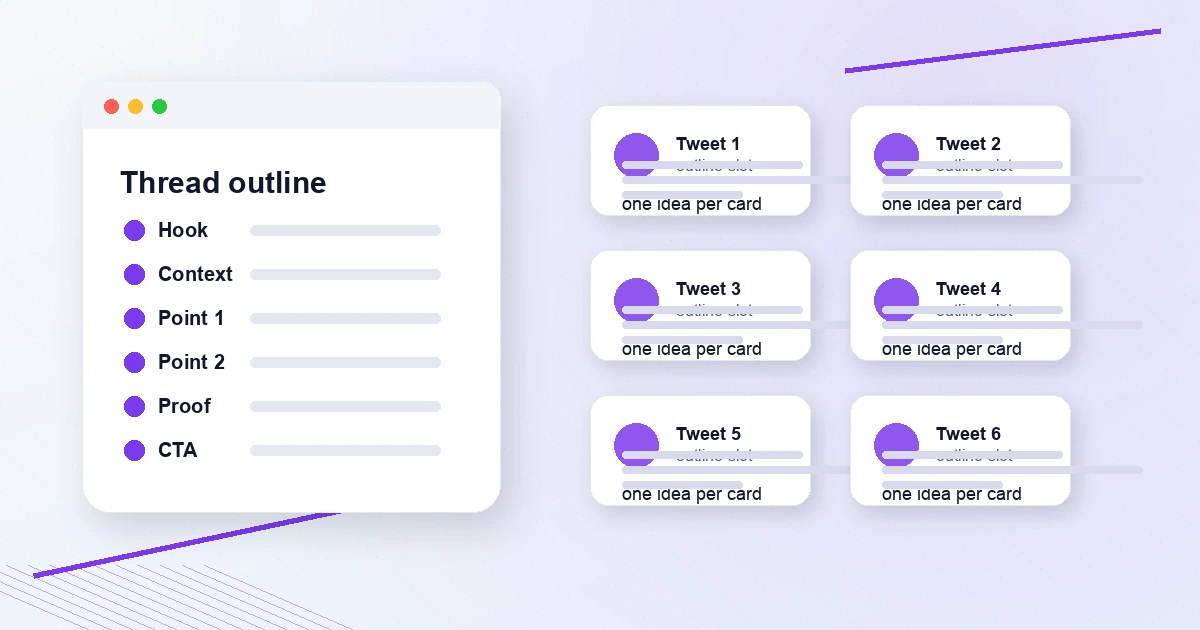
Use the free Thread Outline Builder when you want a quick structure. Pick a topic, choose a style, set the length from 3 to 12 tweets, and it gives you editable slots for hook, body, proof, and CTA.
Quick answer: what should a Twitter thread outline include?
A good thread outline includes:
- Hook: the reason to open the thread
- Promise: what the reader will understand by the end
- Context: why the topic matters now
- Body points: one idea per tweet
- Proof: examples, numbers, screenshots, or lessons
- Turn: the surprising insight or practical takeaway
- CTA: what to do next
Do this before writing the full thread. It saves time and makes the final thread easier to split, edit, and publish.
Pick the right thread shape
The Thread Outline Builder supports four useful shapes.
1. Story arc
Use this when the reader should feel a transformation:
Before -> conflict -> lesson -> result -> takeaway
Best for founder stories, case studies, mistakes, launches, and personal lessons.
2. List or teardown
Use this when you have several clear points:
Hook -> list promise -> point 1 -> point 2 -> point 3 -> summary
Best for tools, mistakes, examples, resources, and frameworks.
3. How-to
Use this when the reader wants a process:
Outcome -> prerequisites -> steps -> example -> CTA
Best for tutorials, repeatable workflows, and tactical creator advice.
4. Contrarian take
Use this when the hook challenges a common belief:
Common advice -> why it fails -> better model -> examples -> conclusion
Best for opinionated posts, category myths, and "everyone says X, but Y works better" threads.
The 7-tweet outline that works almost anywhere
If you are unsure, start with seven tweets:
- Hook with a specific promise
- Why the topic matters
- First key idea
- Second key idea
- Third key idea
- Example or proof
- CTA or summary
That is long enough to teach something, but short enough that the reader does not feel trapped.
Example outline
Topic: "Why AI replies sound generic"
Style: How-to
1. Hook: Most AI replies fail because they answer the tweet but ignore the person.
2. Context: X replies are public positioning, not private chat.
3. Step 1: Match the original post's intent.
4. Step 2: Add one specific observation.
5. Step 3: Keep the reply short enough to invite a response.
6. Example: Generic reply vs specific reply.
7. CTA: Audit your next reply before posting.
Now each tweet has one job. You can write faster because the structure already made the decisions.
For reply-specific writing, pair this with How to Write Better X Replies With AI and the Twitter Reply Audit.
Outline first, split second
Do not paste a long essay into a splitter and hope it becomes a thread. A splitter can cut text into pieces, but it cannot fix a weak argument.
Better workflow:
- Build the structure in the Thread Outline Builder.
- Write each section in plain language.
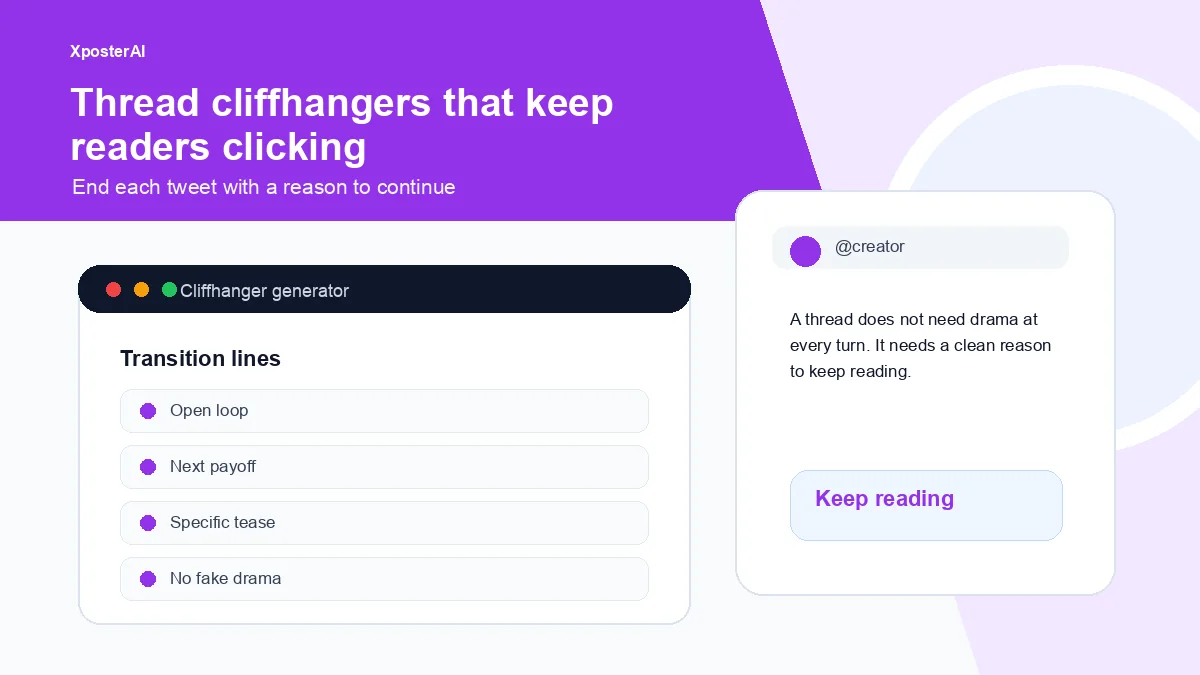
- Add cliffhangers between major turns with the Thread Cliffhanger Generator.
- Split final text with the Twitter Thread Splitter.
- Check length with the Twitter Character Counter.
This keeps the thread readable instead of just technically under 280 characters.
FAQ
How many tweets should a thread have?
Use as many as the idea needs, but most practical threads work well at 5 to 9 tweets. If the idea needs more than 12, consider writing a post or article first and turning the strongest section into a thread.
Should every thread have a CTA?
Yes, but the CTA can be soft. It might be "follow for more," "try the tool," "reply with your example," or "read the full guide." The point is to give the reader a next step.
What makes a good thread hook?
A good hook makes the value specific. Use the Tweet Hook Analyzer if you want a score across curiosity, specificity, tension, and brevity.
Build your next outline
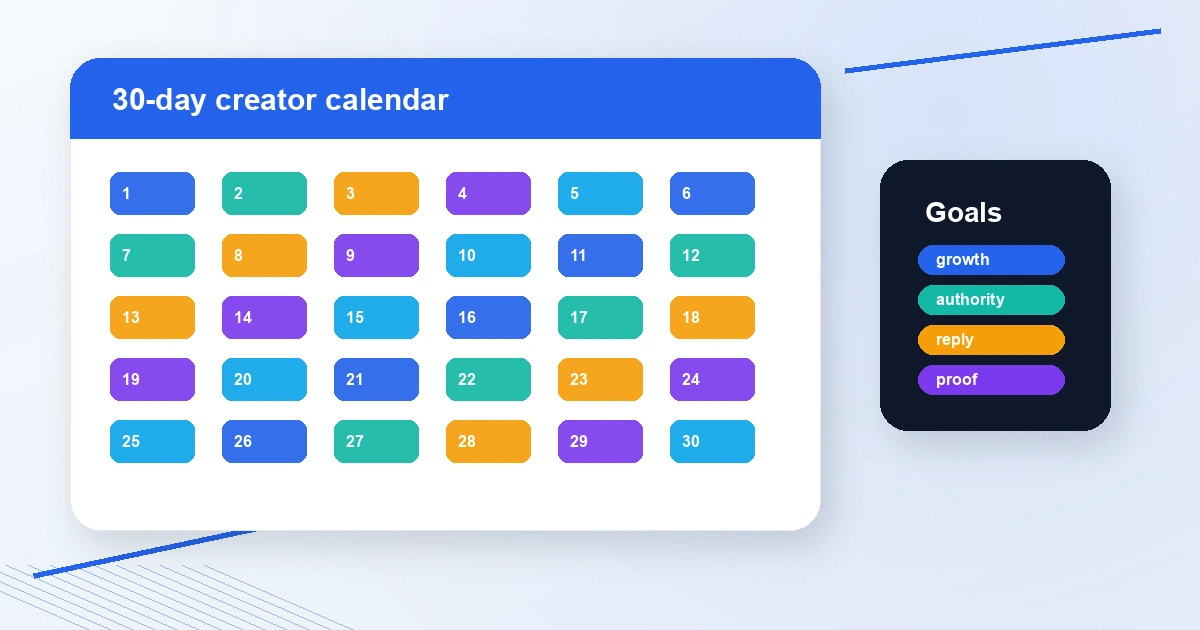
Start with the Thread Outline Builder. Then use the Posting Calendar Generator to decide when the thread fits your content plan.
Good threads do not start as perfect prose. They start as a clear path.