Posting time matters less than people want and more than skeptics admit.
A great post can underperform if the right audience never sees it. A weak post does not become strong because it went out at 8:30 AM. Timing is not the strategy. It is distribution hygiene — the same way clean links and a readable bio are distribution hygiene.
So start with two or three reasonable windows, then actually test your own audience for a few weeks. The Best Time to Post on X tool gives you a sensible starting grid; the Engagement Rate Calculator and UTM links tell you which window held up after you ran the experiment.
Stop looking for one universal time
Most timing advice you'll read is cargo-culted from 2019 dashboards. "Tuesday 10 AM EST" was probably true for one brand's newsletter audience in a different feed era. It tells you nothing about who follows you.
Your audience might be founders checking X before standups, developers browsing at midnight, designers posting between client calls, or customers in a time zone six hours off from yours.
Start with behavior, not folklore.
- Morning: good for workday ideas, practical threads, launch notes.
- Lunch: good for quick observations, replies, lighter posts.
- Evening: good for reflective posts, story posts, community conversation.
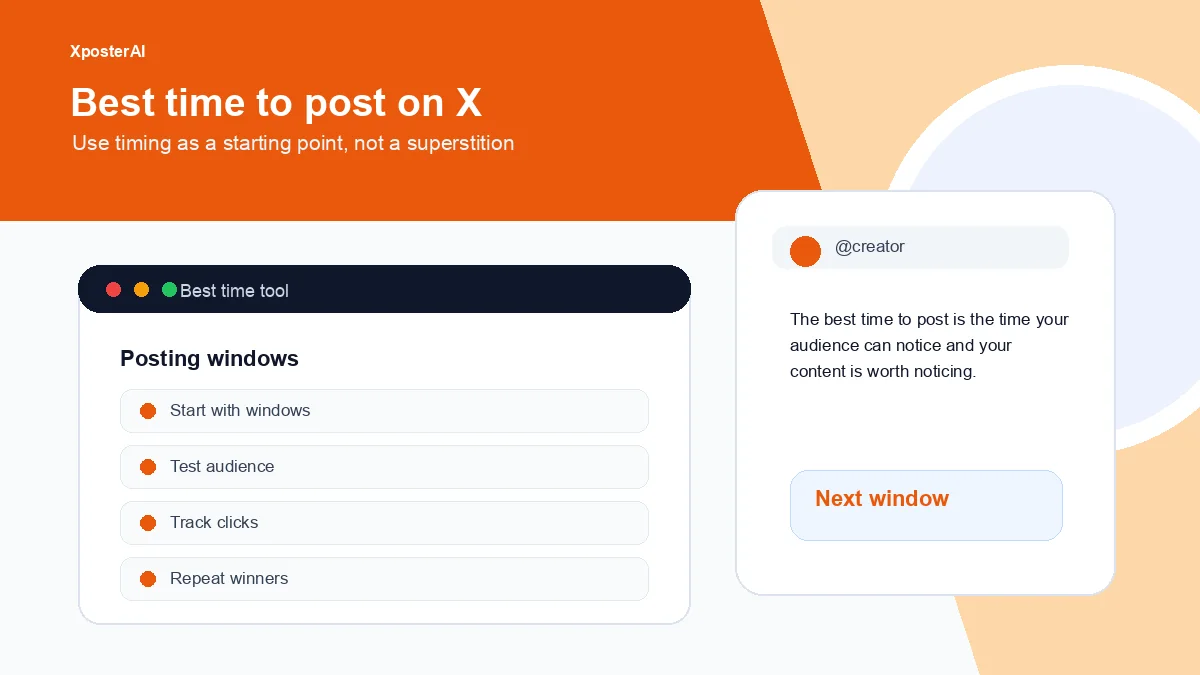
The right window is the one that repeatedly gives your best posts a fair shot.
A simple four-week timing test
Pick one post type. For example: practical creator workflow tips.
Week 1: Tuesday and Thursday at 8:30 AM.
Week 2: Tuesday and Thursday at 12:15 PM.
Week 3: repeat the stronger window.
Week 4: test evening only if the first two windows are weak.
Track replies, profile clicks, link clicks, and saves if available. Do not compare a strong thread at 9 AM to a rushed promo at noon and call that a timing test — you're measuring two variables at once and you'll learn nothing.
The first time I ran this against my own account I was sure evenings would win. They didn't. Mid-morning Tuesdays beat every evening slot by a wide margin, and I'd been quietly burying my best posts in the 9 PM dead zone for months.
What timing cannot fix
Timing will not fix a vague hook. It will not fix a confusing bio. It will not fix a post that asks for clicks before giving value. It will not fix a thread with no structure.
That is why timing should come after basic quality checks: hook, shape, link, CTA, and audience fit. If those are weak, a perfect 8:47 AM send only delivers the weak post to more people.
Turn timing into a test
Use Best Time to Post on X to choose test windows. Use the Tweet Preview Generator before publishing. Use the UTM Campaign URL Builder when the post sends traffic somewhere important. For more measurement detail, read UTM tracking for creators.
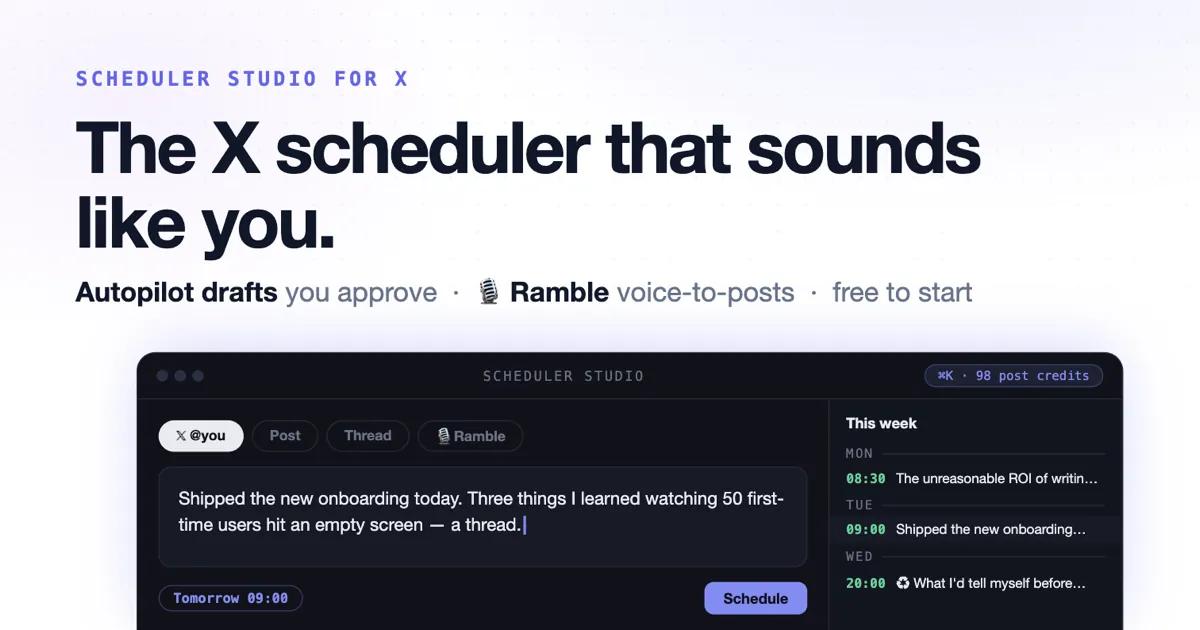
If you schedule through XposterAI, the Stats tab learns your best hours from your own posts — it tracks engagement for a week after each one goes out, and a finding like "your audience peaks at 11:00" is a clickable tile that re-centers Autopilot's drafting slots on that hour. Same four-week test, minus the spreadsheet.
FAQ
What is the best time to post on X?
There is no single best time for every account. The honest answer most posts won't give you: it depends on whether your followers are checking the app between meetings or after dinner, and you find that out by sending the same kind of post in two different windows on different weeks. Two weeks of side-by-side data beats any rounded-up industry chart.
How long should I test?
Two to four weeks is enough to see directional patterns if you keep content type consistent.
Should I repost the same post at different times?
Repurpose the idea, but change the hook or framing. Identical reposts look lazy and the algorithm seems to know.