A thread splitter and a thread outline builder sound like cousins. They solve different problems.
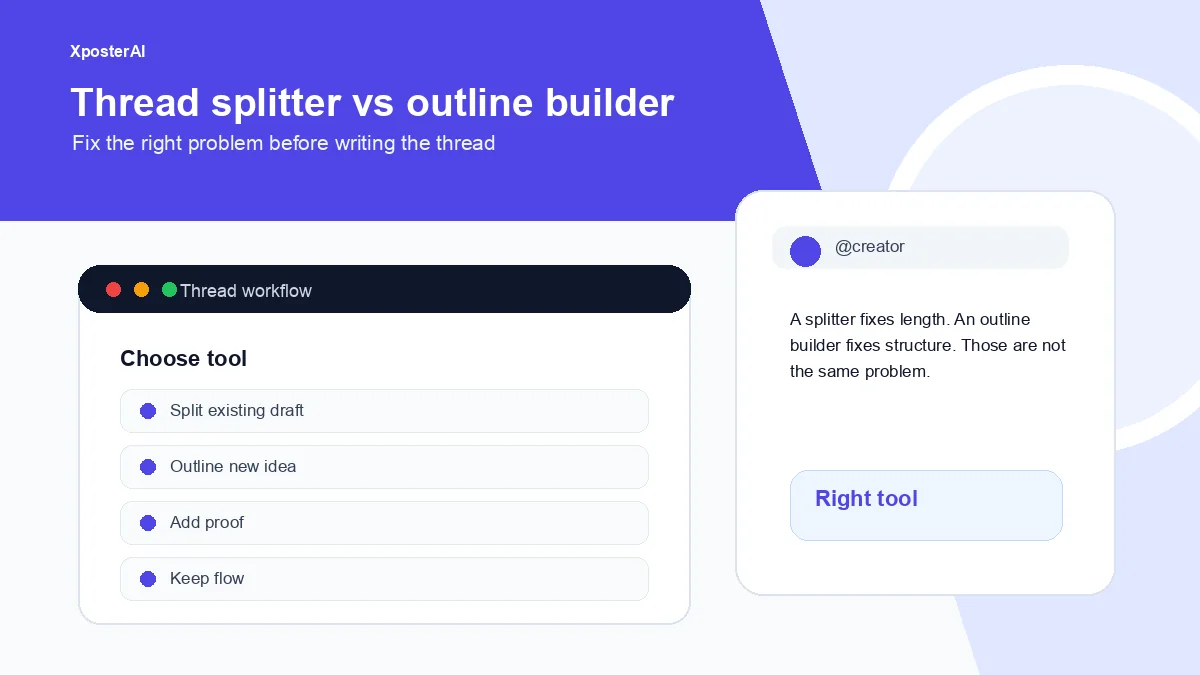
A splitter fixes length. An outline builder fixes structure. If you grab the wrong one, you end up with a perfectly chunked thread that still has no argument — six neat tweets in search of a point.
The short of it
Use the Twitter Thread Splitter when you already have a long draft and need clean tweet-sized chunks. Use the Thread Outline Builder when you only have a topic, a rough idea, or a messy note dump.
The decision rule
Ask one question: do I already have the argument?
If yes, split.
If no, outline.
If you have a long draft but the order feels wrong, outline before splitting. Splitting a messy argument just turns one messy post into six messy posts. I have learned this the hard way more than once — the splitter is so satisfying to click that it lets you skip the harder edit.
A reference table
| Situation | Use |
|---|---|
| Finished long post | Thread splitter |
| Topic but no structure | Outline builder |
| Newsletter section to repurpose | Outline, then split |
| Draft thread with weak transitions | Cliffhanger generator |
| Over-limit post with one idea | Edit, do not thread |
A practical example
You wrote 1,200 characters about cleaning links before posting on X. The argument is already clear:
- Messy links look spammy.
- Tracking parameters are useful but ugly.
- Clean links improve trust.
- Use a cleaner before posting.
That draft needs splitting. The structure is doing its job; you just need the right line breaks.
Now imagine you only have the topic: "profile visits but no follows." That needs an outline first — hook, problem, four audit points, example, CTA — before a single word gets written. Splitting a topic is not possible. There is nothing to chunk.
The common mistake
Creators reach for a splitter because it feels productive. It produces output fast. But output is not structure.
If the reader cannot explain why tweet three follows tweet two, the thread needs planning, not splitting. Most weak threads are not too long. They are out of order.
Pick the right thread tool
Use the Thread Outline Builder for new ideas, the Twitter Thread Splitter for finished drafts, and the Thread Cliffhanger Generator when the sequence needs better transitions. For a deeper writing pass, read how to write a Twitter thread outline.
FAQ
Can I use both tools?
Yes, and the order matters. Outline the idea first so the spine is right, draft into that spine, then run the finished draft through the splitter for the actual tweet boundaries. Running them in reverse is what produces threads that read like a long blog post chopped at random.
When is a thread unnecessary?
When the idea works as one sharp post. Do not make a thread just because the draft is long.
What if my thread already exists?
Split it first, then read the sequence. If the order feels weak, rebuild the outline.